Gulen 2024
Ahead of the Gulatinget 2024 jubilee, which celebrated both the National Law anniversary (750 years) and the Gulating Law (1,000 years), Tone Einelia and I were invited to work in Gulen municipality for a full year. The invitation came because we had established Finna stad, an artistic framework for exploring what happens in the encounter between art, place, and people. Throughout the year, we worked with different groups in Gulen's local communities to get to know the people, places, and culture.
The theme of the jubilee was values in the legal tradition, such as trust, democracy, and peace. We asked ourselves what these concepts can mean today, which voices get to take part in democratic self-governance, and how we can build trust in one another. We created various meeting places for young people, older people, and local enthusiasts.
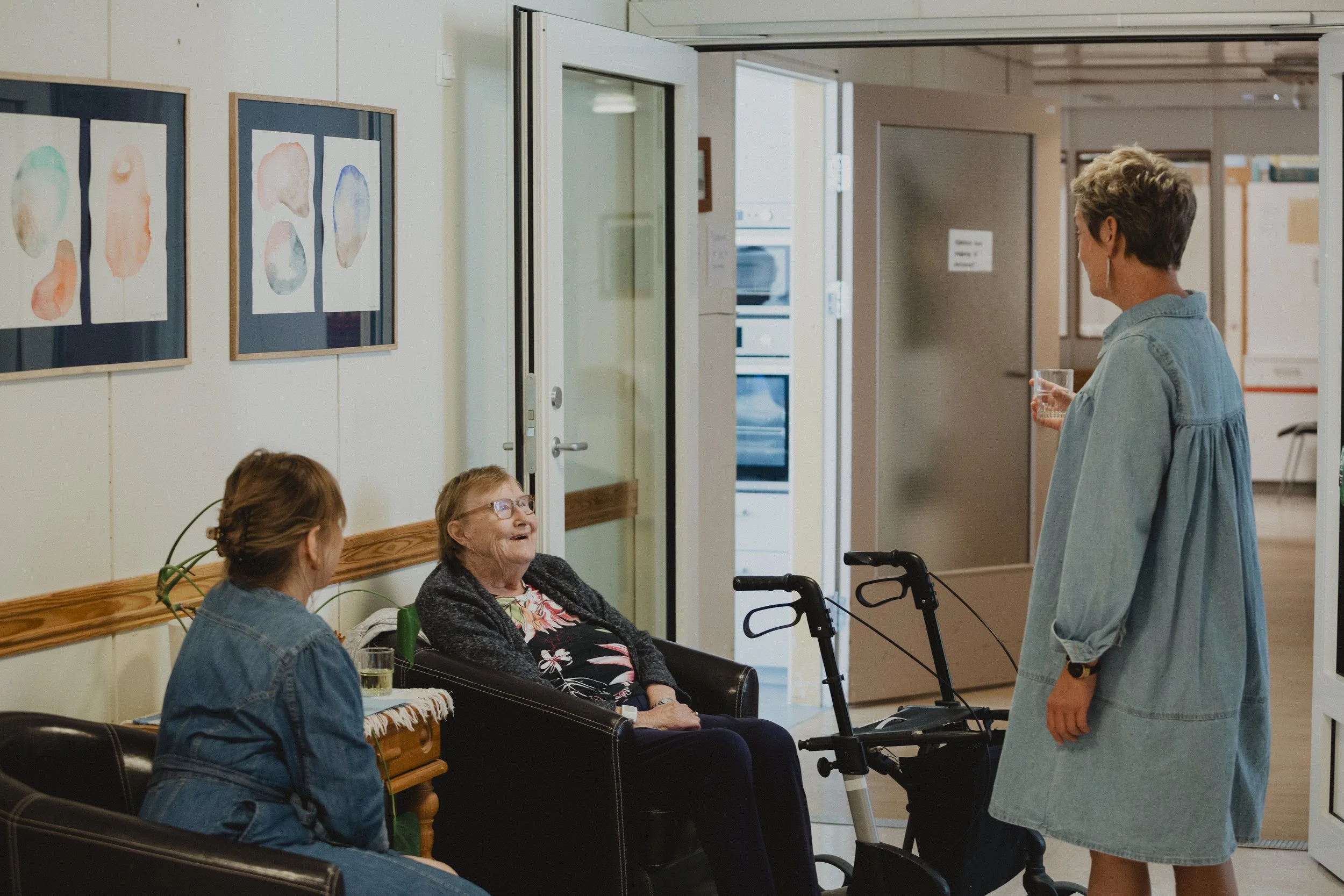
We wanted to get to know those who have lived in Gulen the longest, and so we established a regular meeting place at Gulen nursing home. There we were able to furnish a sensory room, where we made things together, shared stories, wrote poems, laughed heartily, were moved, and ate cookies. We gathered all of this into an artwork for the nursing home, as a kind of trace of the time we had spent together.
A Conversation About the Exhibition Finna Stad "Ly" (Shelter)
Tone Einelia, Petra Rahm and Eli Lea
Eli: How did your collaboration begin?
Petra: Tone Stedal Haugland at Vestland County Municipality invited us to give a talk at the county's 2021 culture conference. It was the first time we did anything together. Tone knew us both from before and thought we should meet. Our talk was to be about democracy, art and place.
Tone: We started talking about this theme, and suddenly we had found someone to talk to about things we had each been working on for a long time. We had both been interested in this theme from our own positions. I have worked with community development across different disciplines, in collaboration with municipalities and various research and development institutions. Petra comes from the art field and has been interested in place, storytelling and local communities as an artist. When we started talking, we quickly found that our different experiences and standpoints overlapped and complemented each other.
Petra: Eventually we thought this conversation about art, place and democracy could continue in a broader collaboration. We established an artistic framework that we call Finna Stad. Within this framework we want to explore what happens in the meeting between art, place and people, through various projects and in a book we are working on.
In 2023 we were invited to develop a project in connection with Gulatinget 2024. Tone Ekerhovd, who is the project leader for the jubilee, had heard our talk at the culture conference, and when she was going to put together a program for the celebration of democracy in Norway, she wanted us on board. One premise of the invitation was that we would work with the local community, so we began discussing how we could develop a project on that premise. Since Gulatinget 2024 had chosen the themes Trust, Self-Governance (Folkestyre), Peace, it was natural for us to think around these concepts. If we are going to talk about democracy, it requires participation from those who are part of society. That is the basic principle of the project. Who gets to take up space? Is it those who shout the loudest? Who attend meetings? How can we create room for those who don't? What platform do, for example, residents of nursing homes have to participate in society? It felt natural for us to use the occasion, and art, to create meeting places.
How did you begin?
Tone: We didn't plan everything in advance but let the project develop intuitively. Natural conversations can't be planned. You can facilitate them, but then you just have to hope they happen. The same goes for trust: it doesn't exist beforehand, but develops over time.
Petra: We created the frameworks around the project, but the content was shaped by whom and what we met. We have learned things from those we have collaborated with, and we have shared our own knowledge. That reciprocity has been important to us.
Tone: We began looking for people and places where there was a seed of activity that we could connect to. Early in the work we got in touch with a local enthusiast, Anne Grete Hønsi at Oppdalsøyra. She was interested in collaborating with us. Anne Grete was developing a lecture on J.C. Dahl for the Culture Days at the community hall Gulatun. It turned out that J.C. Dahl had roots in Oppdalsøyra. Anne Grete had a dream that Gunnar Danbolt would come and give a lecture on J.C. Dahl.
"Surely we can make that happen!" we said. Together with Anne Grete we put together a full evening about J.C. Dahl at the community hall. Anne Grete gave a presentation of Dahl's connection to Oppdalsøyra and Gulen, Gunnar Danbolt lectured, and we gave a presentation of our project.
The young people from Dalsøyra school had made a café and an art exhibition with landscape pictures they had made at school. In addition, there was a sales exhibition with local artists.
Did many people come?
Petra: I expected maybe 10 people would come, but it was packed. There were probably over 100 people. The next day we held an open ceramics workshop, and again our expectations for attendance were low, but many came that day too. It was one of the first things we did.
How did the project develop from there?
Petra: The Culture Days gave us an opportunity to get to know people and learn more about what people in the local community are interested in and engaged with.
Tone: And then nature and landscape became a theme we carried with us through the project. For example, we learned that stone was an important resource and that dry stone walling is a traditional building practice in the village.
How did you carry that forward?
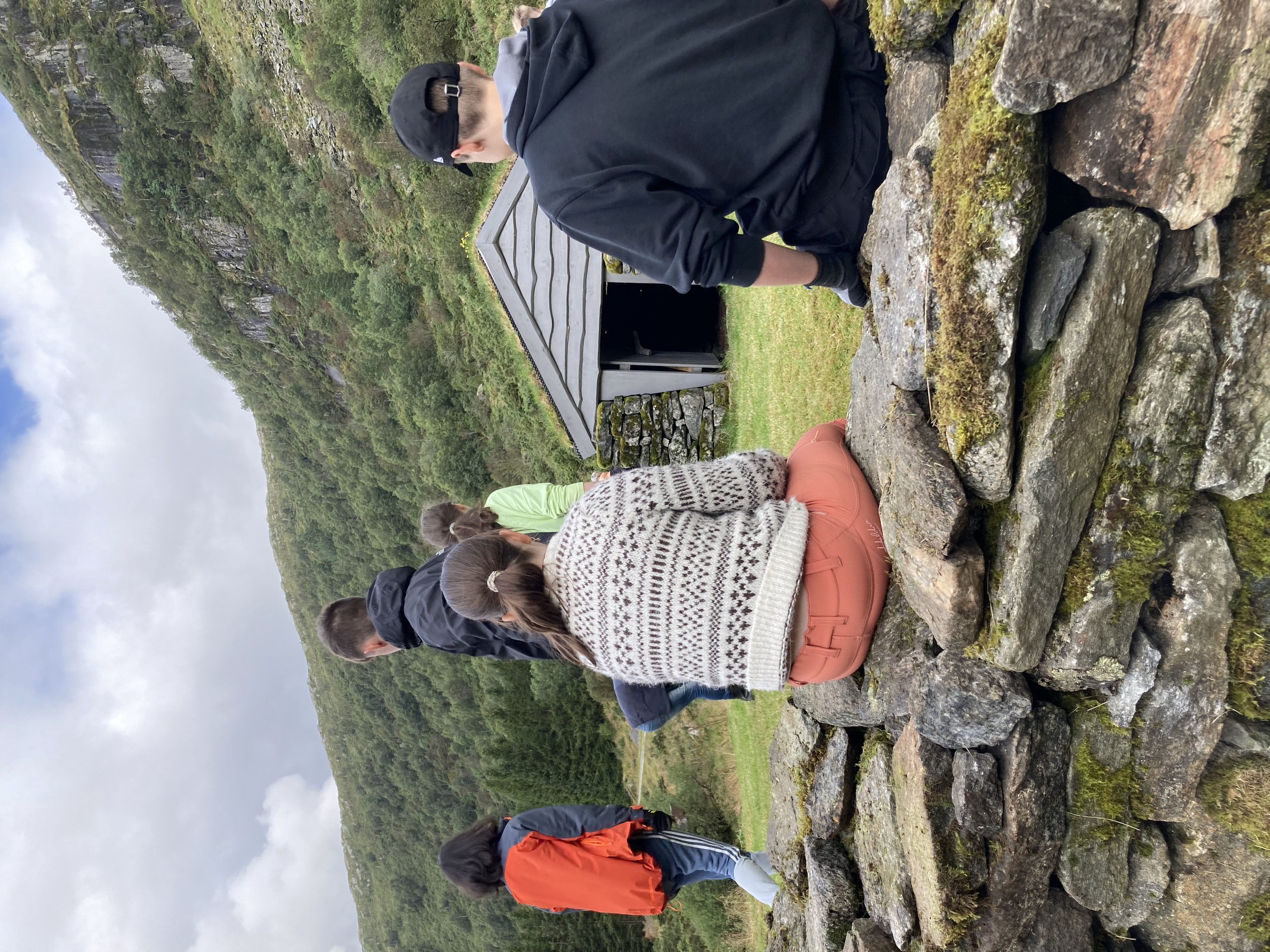
Petra: We became aware of all the stone and all the dry stone walls we saw around us. We asked Anne Grete whether there was anyone who could teach us this technique. It ended up as a workshop with Anne Grete and young people at Dalsøyra school, where we learned to build a traditional dry stone wall. In parallel, we also experimented with clay together with the young people.
Tone: By this point we had met many families with children in the local community, and many people knew who we were.
Petra: But a local community consists of more than families with children. We had met many children and parents, but fewer elderly people. We contacted the nursing home and asked if we could visit and tell them about what we were doing. We said right away that we would like to do something together with those who worked and lived there.
How was the response?
They were a bit hesitant at first, perhaps unsure what two artists would do at a nursing home. But we were given a tour and noticed that some rooms weren't much in use. We asked whether we could borrow a room for pop-up workshops, and they said yes. It developed so that we got to borrow the room over time. We furnished it as a sensory room where people could hang out with us, drink coffee… Gradually we introduced artistic activities in the room.
Why did you want to be there over time?
Tone: Because we wanted to work slowly and not disturb the routines at the nursing home. The residents need their routines. We needed time for them to feel safe with us. Many didn't remember us from one time to the next, but they became used to us and familiar with us anyway, in a way.
What artistic activities did you work with?
Petra: We tried things out. The activity coordinator was a good conversation partner. We got a good response to writing poems together and to watercolor painting. Tone cut up a text by Selma Lagerlöf, which we put together in new ways. And then we worked wet-on-wet with watercolor. Many people were engaged in that.
Tone: They got a real wow experience when the colors spread out.
What physical interventions did you make in the room?
Petra: We tried to create a room with a different aesthetic from the other rooms. And we got feedback from visitors that they experienced the room as different, in a good way.
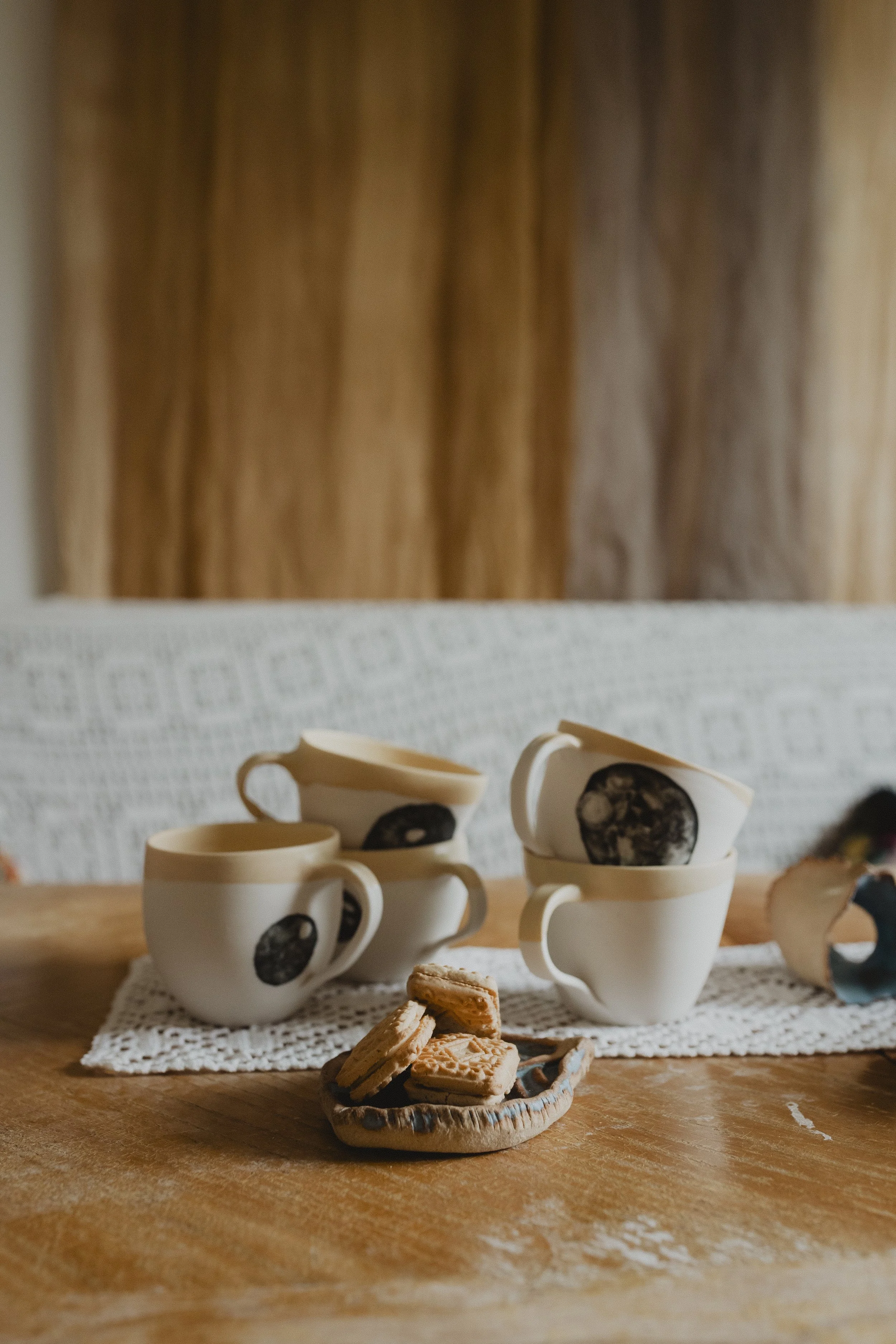
Tone: We took away some things and let others stay. We added handmade objects: jars, platters, bowls and cups in ceramic, and high-quality plant-dyed textiles. We wanted it to feel tactile. We also had typical craft tools and materials meant to invite creative processes. We wanted the room to be perceived as a room of possibility, where different things could happen. Objects and textiles became gateways to memories.
Petra baked a lot of cakes. That also became a gateway to interesting conversations that turned into a shared experience. The sensory, what happens here and now, became a gateway to community.
Petra: Ten of the watercolors we made together were framed, and they now hang as decoration at the nursing home.
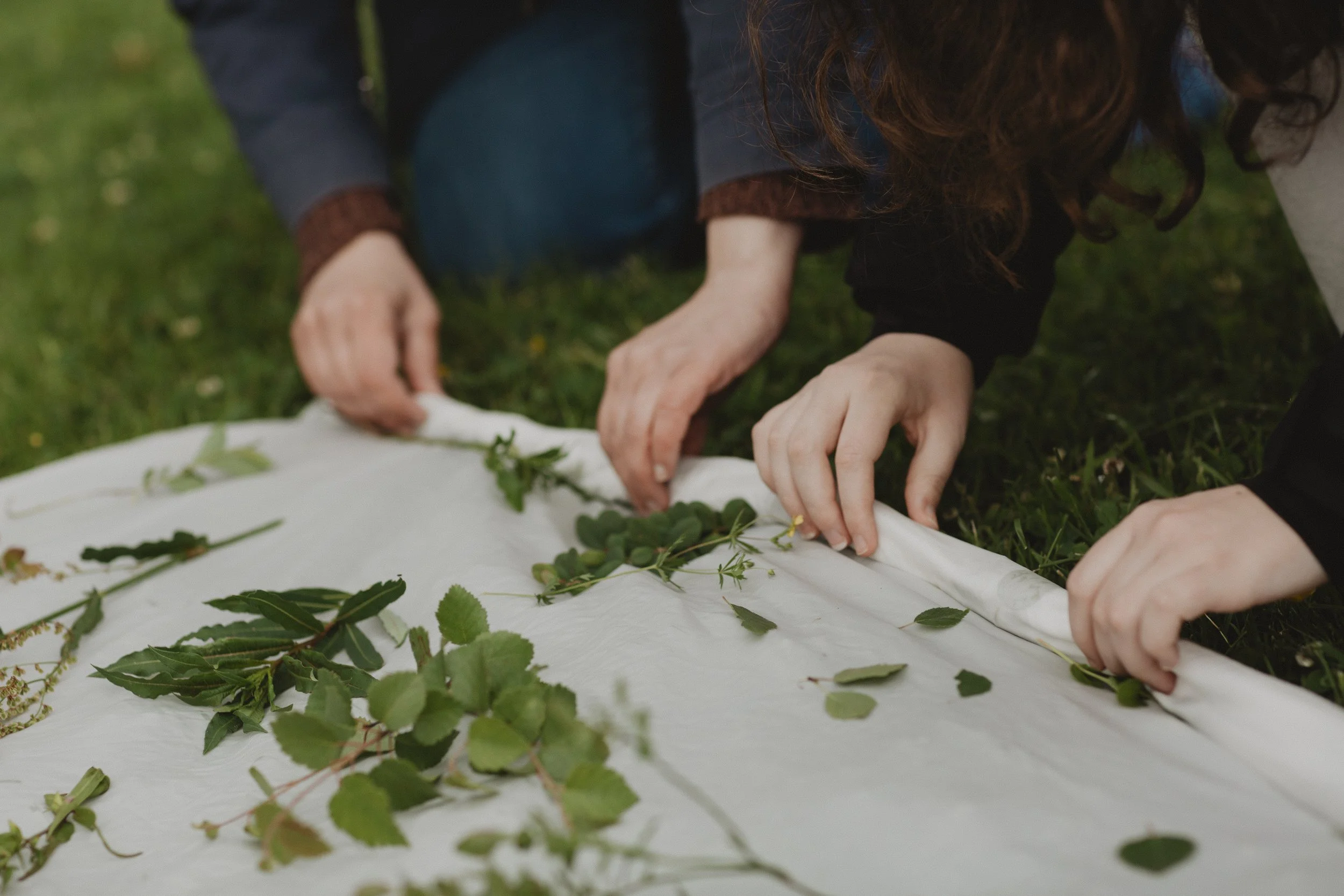
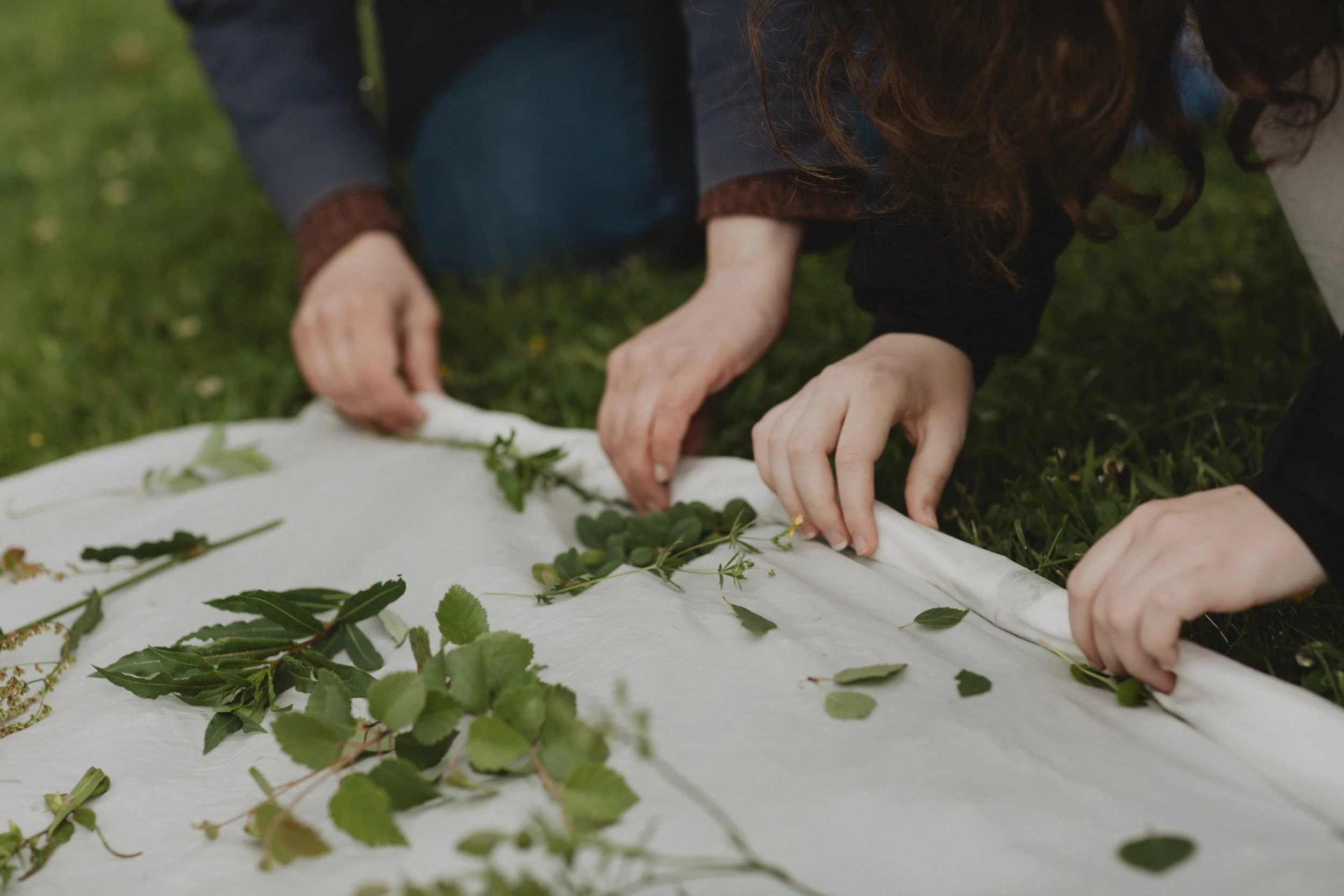
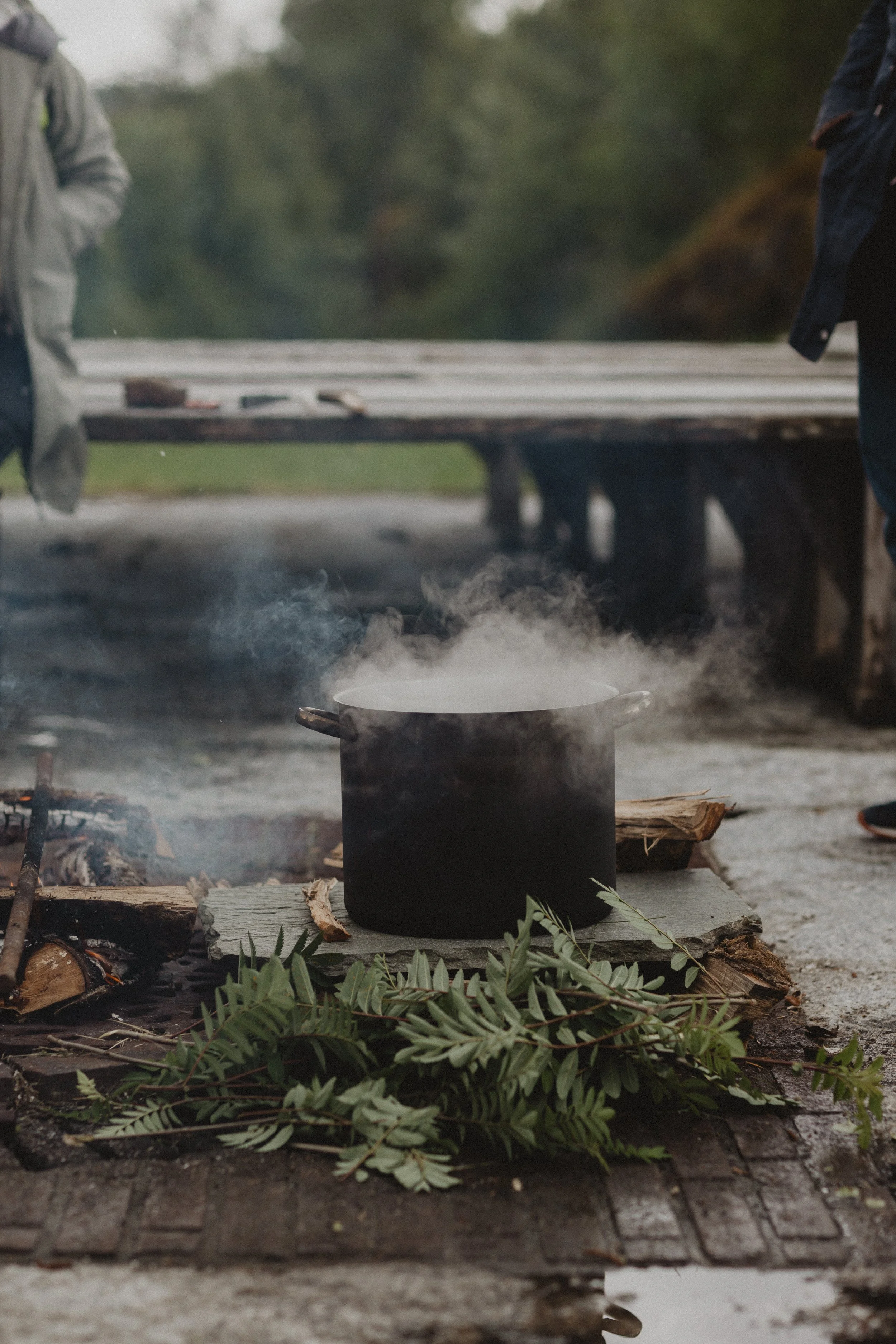
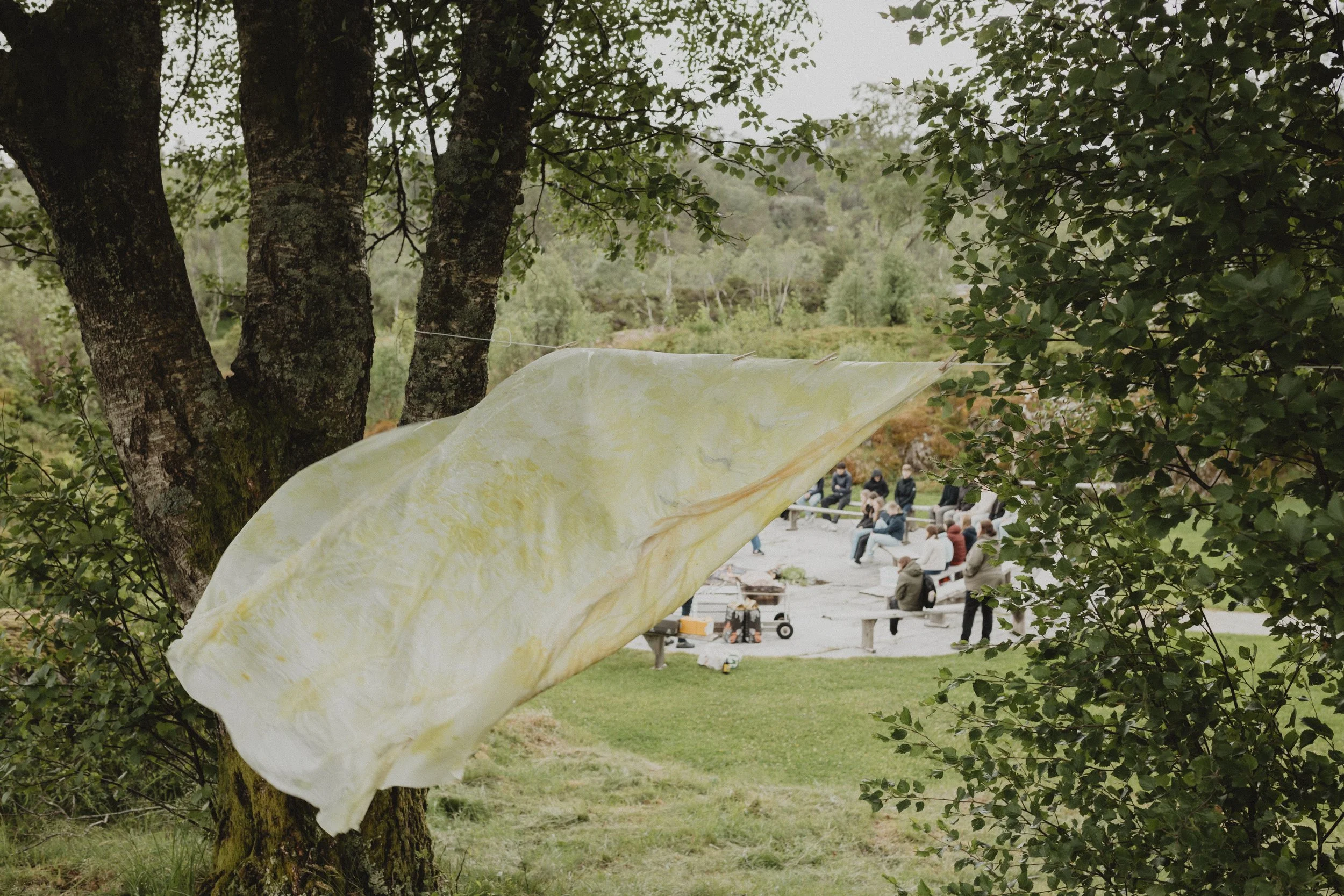
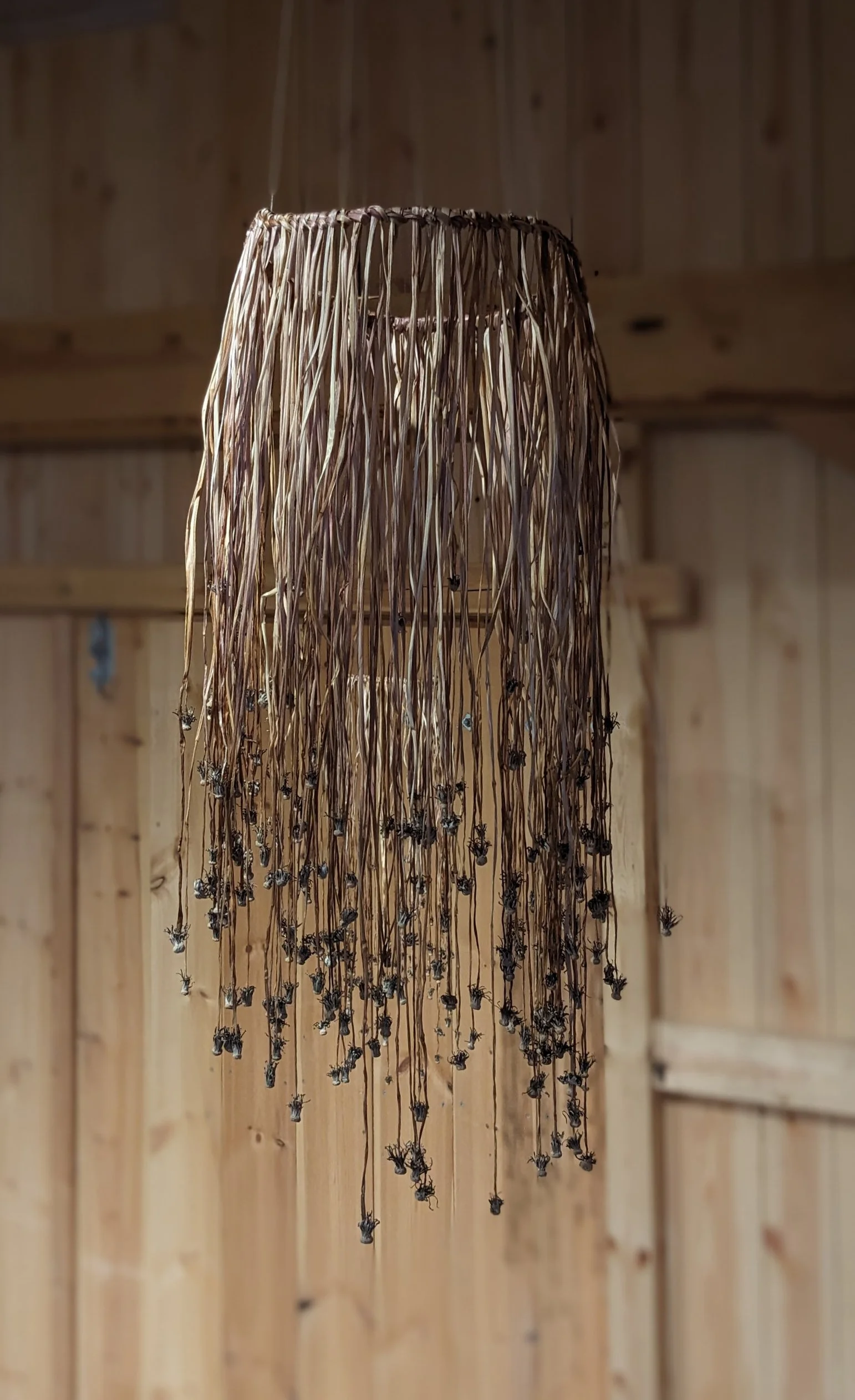
Tone: The last thing we did in the project was a ceramics workshop and a workshop on plant dyeing of textiles for all lower secondary school students in Gulen. There we met young people we had worked with before, but also many others. We have continued working with several of those pieces, and they are shown in the exhibition.
What are you working on going forward?
Petra: Now we will be working a lot on the book, which is to be published by Skald forlag in 2025. In the book we will look at the project in Gulen as a case and a shared reference project. I'm looking forward to reflecting on the process, the collaborations and everything that has come out of it